Call or Text - (714) 528-3789 | Email Us : valerie.olivemill@gmail.com
Countertops by Olive Mill
  • Material
    • Quartz
    • Porcelain
    • Corian
    • Quartzite
    • Granite
    • Soapstone
    • Marble
    • Countertop Comparison Chart
  • Services
    • Countertops
    • Shower Surrounds
    • DIY – Do It Yourself
    • Sink Options
    • Edge Options
  • Gallery
  • BLOG
  • The Process
    • Shop and Showroom
    • Fabrication & Installation
    • FREE Estimate
    • Craftsmanship
  • ABOUT US
    • Contact Us
    • Our Company
    • Map To Showroom
  • More…
    • FAQ
    • Videos
    • Countertop Comparison Chart
    • Warranty Info
    • Care and Cleaning Information
  • Search
  • Menu Menu
  • Youtube
  • Facebook
  • Yelp
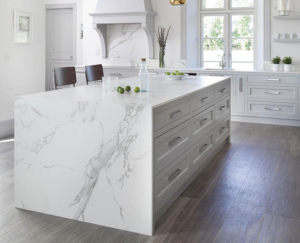
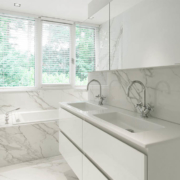
Unique Calacatta - Metro Quartz Countertop. Olive Mill located in Orange County, CA

Are Waterfall Countertops Out of Style in 2022?

April 25, 2022/in Countertops

Waterfall countertops were all the rage a few years ago, but are they still popular in 2022? Let’s look at some of the pros and cons of this type of countertop to find out.

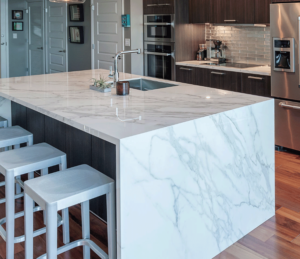
1. What are waterfall countertops and what do they look like? Waterfall edges are created by continuing the countertop material down the end of cabinet to the floor. This gives the countertop an appearance that resembles a waterfall.

2. What are the benefits of having waterfall countertops in your home? It adds a dramatic element of luxury and can make a small kitchen appear larger. Waterfalls are a fantastic way to highlight the color and pattern. They may be viewed from various perspectives than the counter, which adds to the appeal of the material.

3. Are waterfall countertops out of style now? In recent years, the popularity of waterfall countertops has declined but not due to them being out of style. Due to the higher cost of material, many homeowners have opted out of having them installed in their home.

4. Are waterfall edges more expensive? Yes, waterfall countertops are typically more expensive to install than other types of countertops. This is due in part to the extra materials needed and the additional labor involved in creating the waterfall edge.

5. If you’re thinking about getting waterfall countertops for your home, what are some things you should keep in mind before making a final decision?

    • They are stylish and elegant and can add a touch of luxury to your kitchen.
    • They can be more expensive than other types of countertops.
    • They can be difficult to install, so you may need to hire a professional.
    • They may be out of style in a few years, so you should weigh the pros and cons.

Are waterfall countertops still popular in 2022? That’s a tough question to answer, as trends tend to come and go. However, there are several benefits to having this type of countertop in your home that may make it worth considering for your next kitchen remodel project.


For more information about your next countertop project, contact Valerie at Olive Mill.
Call or text (714) 528-3789 | valerie.olivemill@gmail.com | Contractor’s License #823217
https://olivemill.com/wp-content/uploads/unique-calacatta-metro-quartz-countertop.jpg 684 845 Andy Graves https://olivemill.com/wp-content/uploads/logo_olivemill_299x100.png Andy Graves2022-04-25 18:42:482022-04-26 15:40:37Are Waterfall Countertops Out of Style in 2022?
Calacatta Neolith Porcelain Vanity Countertop

Do Porcelain Countertops Chip?

April 21, 2022/in Countertops


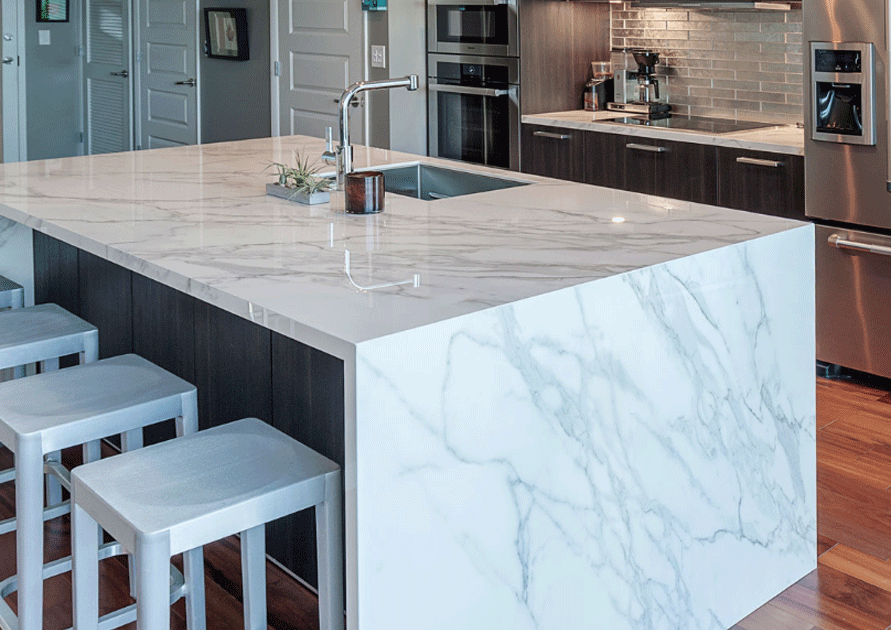
Neolith Calacatta Countertop with Waterfall Edge

Neolith Calacatta Countertop

Porcelain countertops are a popular choice for many homeowners. They are sleek and stylish, and they come in a variety of colors and finishes. But one question that many people ask is whether porcelain countertops chip easily.

Porcelain is a strong and durable material, so it is unlikely that your countertop will chip if you use it normally. However, porcelain can be susceptible to chipping if it is hit hard enough or if it experiences a lot of wear and tear. The best way to avoid chipping is to be careful with your porcelain countertop and to avoid using it for tasks that could damage it.

If you are worried about porcelain countertops chipping, you can always ask your contractor or countertop company for advice. They will be able to tell you more about how to care for your porcelain countertop and how to avoid damaging it. With a little bit of care, your porcelain countertop should last for many years.

Repairability:

If your countertop does chip, you will need to have it repaired by a professional. Depending on the size and location of the chip, this can be a simple repair. However, large, or deep chips may require more extensive repairs and they may be noticeable.

Conclusion:

Thanks for reading! We hope this blog post has answered all of your questions about porcelain countertops and their susceptibility to chipping. If you have any further questions or would like more information, please don’t hesitate to call or text today. Our team is here to help you make the best decision possible when it comes to choosing your next countertop material. Have a great day!


For more information about your next countertop project, contact Valerie at Olive Mill.
Call or text (714) 528-3789 | valerie.olivemill@gmail.com | Contractor’s License #823217
https://olivemill.com/wp-content/uploads/calacatta-neolith-porcelain-countertop.jpg 684 845 Andy Graves https://olivemill.com/wp-content/uploads/logo_olivemill_299x100.png Andy Graves2022-04-21 16:04:142022-03-28 21:03:58Do Porcelain Countertops Chip?
Cadenza - Metro Quartz Countertop

Are Porcelain Countertops Cheaper than Quartz?

April 18, 2022/in Countertops
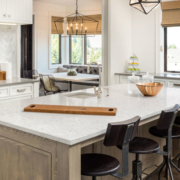
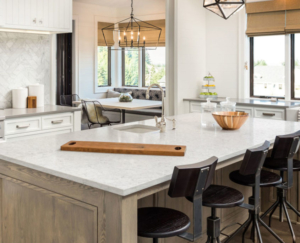
Cadenza - Metro Quartz Countertop

Cadenza – Metro Quartz Countertop

Are porcelain countertops cheaper than quartz? This is a question that many homeowners are asking these days. The answer, however, is no – porcelain countertops are not cheaper than quartz.

So why would someone choose to install porcelain countertops in their home instead of quartz? There are a few reasons: durability, aesthetics, and price. Let’s take a closer look at each of these factors.

Durability

Porcelain is an extraordinarily strong and durable material. It is resistant to scratches, staining, and heat. This makes it an ideal choice for areas that see a lot of use, such as kitchens, BBQ Islands, and bathrooms.

Quartz on the other hand is scratch and stain resistant but is NOT resistant to staining. Quartz countertops require a sealer to help protect from staining and water absorption.

Aesthetics

Porcelain countertops come in a wide variety of colors and styles. This gives homeowners the ability to create the perfect look for their home. quartz tends to come in medium to dark colors and lack the veining that is so populate today.

Price

The cost of porcelain countertops is higher since they take longer to make and install. During the fabrication process, porcelain is a difficult material to work with. To guarantee beautiful edges, tight seams, and precise fit and finish, special methods must be employed.

Quartz costs have decreased in recent years since they are so many manufacturers, resulting in a cheaper slab.

While porcelain is not cheaper than quartz, they can be more desirable because of the more popular designs and colors. Also, porcelain countertops are not affected by heat or UV light making them more durable.

Conclusion

So, there you have it – porcelain countertops are not cheaper than quartz. But they may be the right choice for you, depending on your needs and preferences. Talk to a countertop specialist today to learn more about porcelain and whether they are right for your home.


For more information about your next countertop project, contact Valerie at Olive Mill.
Call or text (714) 528-3789 | valerie.olivemill@gmail.com | Contractor’s License #823217
https://olivemill.com/wp-content/uploads/cadenza-metro-quartz-countertop.jpg 684 845 Andy Graves https://olivemill.com/wp-content/uploads/logo_olivemill_299x100.png Andy Graves2022-04-18 10:26:312022-04-03 15:48:56Are Porcelain Countertops Cheaper than Quartz?
Dekton Porcelain Countertop - Color: Curo

Are Porcelain Countertops Cheaper Than Granite?

April 14, 2022/in Countertops
Dekton Porcelain Countertop - Color: Curo

Dekton Porcelain Countertop – Color: Curo

Are porcelain countertops cheaper than granite? This is a question that many homeowners are asking these days. The answer, however, is no – porcelain countertops are not cheaper than granite.

So why would someone choose to install porcelain countertops in their home instead of granite? There are a few reasons: durability, aesthetics, and price. Let’s take a closer look at each of these factors.

Durability

Porcelain is an extraordinarily strong and durable material. It is resistant to scratches, staining, and heat. This makes it an ideal choice for areas that see a lot of use, such as kitchens, BBQ Islands, and bathrooms.

Granite on the other hand is scratch and stain resistant but is NOT resistant to staining. Granite countertops require a sealer to help protect from staining and water absorption.

Aesthetics

Porcelain countertops come in a wide variety of colors and styles. This gives homeowners the ability to create the perfect look for their home. Granite tends to come in medium to dark colors and lack the veining that is so populate today.

Price

The cost of porcelain countertops is higher since they take longer to make and install. During the fabrication process, porcelain is a difficult material to work with. To guarantee beautiful edges, tight seams, and precise fit and finish, special methods must be employed.

Granite costs have decreased in recent years since they are no longer as popular, resulting in a cheaper slab.

While porcelain is not cheaper than granite, they can be more desirable because of the more popular designs and colors. Also, porcelain countertops do not ever need a sealer keeping them looking beautiful for years to come.

Conclusion

So, there you have it – porcelain countertops are not cheaper than granite. But they may be the right choice for you, depending on your needs and preferences. Talk to a countertop specialist today to learn more about porcelain and whether they are right for your home.


For more information about your next countertop project, contact Valerie at Olive Mill.
Call or text (714) 528-3789 | valerie.olivemill@gmail.com | Contractor’s License #823217
https://olivemill.com/wp-content/uploads/curo-dekton-porcelain-countertop.jpg 684 845 Andy Graves https://olivemill.com/wp-content/uploads/logo_olivemill_299x100.png Andy Graves2022-04-14 10:16:282022-04-03 18:13:43Are Porcelain Countertops Cheaper Than Granite?
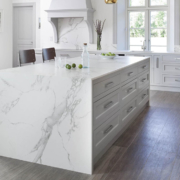
MSI Stile Porcelain Countertop

Porcelain Countertop Cost: What You Need to Know

April 11, 2022/in Countertops

If you are looking for a new countertop, you may be interested in porcelain. But what are porcelain countertops? What factors into their cost? How much do they cost? In this blog post, we will explore porcelain countertop cost.

What are porcelain slab countertops?

Porcelain is made of a mineral called kaolinite. This mineral is mixed with other materials like feldspar, metal oxides, and silica to make porcelain. Porcelain often looks like other materials; for example, some companies manufacture porcelain that looks like marble.

Simply put, porcelain slabs are giant tiles like what used to come in a standard 4″ x 4″ dimension.

Pros and Cons

Many people love porcelain because it is exceptionally durable and beautiful. Porcelain is also considered to be very stain resistant because it does not absorb liquids.

In terms of chipping and scratching, it can resist most damage, but it is still possible. Porcelain shines when it comes to heat and UV resistance. It will not distort when subjected to high temperatures, making it an excellent choice for outdoor use in direct sunlight.

Porcelain comes in a variety of designs, colors, and sizes. You can find porcelain that looks like wood or stone. Some porcelain is even made to look like fabric. The possibilities are endless with porcelain!

What do porcelain slab countertops cost?

Porcelain countertop cost from $100 to $150 per square foot. For comparison’s sake, quartz is usually $70 to $100 per square foot.

The higher cost is due to the complicated manufacturing process. Specialized blades and slow cutting speeds are required for cutting the material. Extra precaution must be taken throughout the fabrication process to guarantee a beautiful end result with sharp edges and seams.

If you’re in the market for a new countertop and are considering porcelain, be sure to give us a call. We can provide you with an estimate for installation as well as answer any questions you may have about this beautiful and durable material.


For more information about your next countertop project, contact Valerie at Olive Mill.
Call or text (714) 528-3789  |  valerie.olivemill@gmail.com  |  Contractor’s License #823217
https://olivemill.com/wp-content/uploads/msi-stile-porcelain-countertop-4.jpg 684 845 Andy Graves https://olivemill.com/wp-content/uploads/logo_olivemill_299x100.png Andy Graves2022-04-11 16:32:402022-04-14 09:33:58Porcelain Countertop Cost: What You Need to Know

How to Clean Quartz Countertops

April 4, 2022/in Countertops

Quartz for Easy Care and Maintenance
Learning how to clean quartz surface countertops takes no time at all. Quartz countertop material is a tough, non-porous, chemically resistant, high-performance surface that elevates residential kitchen aesthetics with the natural beauty of quartz.

How to Clean Quartz Countertops — Routine Care

Just Use Water and a Paper Towel
Quartz surfacing material will retain its radiant, lustrous appearance for many years. For routine cleaning, simply wipe down your countertop with a damp cloth or paper towel and, if necessary, a small amount of non-bleach, non-abrasive cleanser.

Clean Up Spills Right Away — Before They Can Dry
Even though quartz resists permanent staining when exposed to liquids (such as wine, vinegar, tea, lemon juice and soda) or fruits and vegetables, you’ll want to wipe up food and liquid spills as soon as possible.

For stubborn or dried spills, use a nonabrasive cleaning pad such as a white 3M Scotch-Brite®* scrub pad coupled with Formula 409® Glass & Surface Cleaner** or a comparable cleaning product.

How to Clean Quartz Countertops — Essential Gear

Cutting Boards and Trivets
DuPont™ Corian® quartz surfaces are heat- and scratch-resistant, but not heat- and scratch-proof. Use trivets or pads with hot pots, and always use a cutting board. Never chop or slice food directly on your quartz countertops.

How to Clean Quartz Countertops — What Not to Use

  • No Wax or Polish Necessary – Because it is non-porous, quartz surface does not require sealants or waxes. Corian® keeps its lustrous gloss and ultra-smooth surface without polishing.
  • Do Not Use Bleach – Avoid using cleansers that contain bleach. Always follow the cleaner manufacturer’s use instructions and exercise proper care when handling and storing any cleaning products.
  • Avoid High-pH Cleaners – While casual exposure to alkaline materials will not damage Corian® quartz surfaces, highly alkaline (high-pH) cleansers are not recommended.
  • Heat Damage Prevention – Do not place hot skillets or roasting pans directly onto the surface. DuPont recommends the use of trivets and hot pads.
  • Dealing with More Difficult Spills and Materials – Materials that harden as they dry (such as gum, food, grease, nail polish or paint) are especially tenacious. Remove these by gently scraping away the excess with a plastic putty knife.
  • Permanent Markers – Keep permanent markers and inks away from your quartz countertops. Should these agents come into contact with the surface, clean first as outlined above in Routine Care. If the stain persists, moisten a cloth with Goo Gone®**, or a comparable product, and rub it into the stain. Rinse thoroughly with warm water to remove any cleaner residue.
  • Keep Solvents and Powerful Chemicals Off the Counter – Avoid exposing quartz surfaces to strong chemicals and solvents, especially paint removers or furniture strippers containing trichloroethane or methylene chloride. Keep nail polish remover, bleach, bluing, permanent markers or inks, and oil soaps away from quartz.

Removing Cooking Grease

When grease from cooking is an issue, use Greased Lightning™**, or a comparable degreasing product, to help loosen and remove the grease from the surface. Follow the cleaner manufacturer’s instructions for use.

If any of the substances listed above come into contact with quartz surfaces, rinse the exposed surface immediately and thoroughly with water.

https://olivemill.com/wp-content/uploads/logo_olivemill_299x100.png 0 0 Andy Graves https://olivemill.com/wp-content/uploads/logo_olivemill_299x100.png Andy Graves2022-04-04 15:43:352022-03-23 12:01:06How to Clean Quartz Countertops

Granite Countertops – Can They Burn?

March 31, 2022/in Countertops

Besides its stunning, long-lasting beauty, one of the top advantages of granite countertops is their durability. In fact, granite is one of the hardest materials on Earth. Natural stone is resistant to scratches, stains, and heat. One of the most frequent questions homeowners ask is: Can granite countertops burn? Granite Countertop – Can they burn?

The simple answer is no, granite as a natural porous stone will not burn. Because it began as a liquid magma deep within the Earth, and over millions of years is cooled and compressed, it has a natural resistance to heat damage.

Unlike other natural or synthetic products that require trivets to avoid marring their surface from hot pots and pans, heat does not damage these counters. Pots and pans heated to nine hundred degrees will not scorch their lustrous finish, and even a direct flame applied to its surface will not leave burnt or scarred marks.

However, the long answer is that, while it is safe to briefly set hot cookware directly on top of your countertops, there are considerations that may make use of a trivet or hot pad wise.

Epoxy Resin Sealants

If your slab has been treated with epoxy resin sealants, the epoxy may soften with exposure to high temperatures. However, according to Stone World, small cracks and fractures will not be affected, and any visible patches of epoxy glue will soon revert to their original state once the surface temperature cools.

Surface Sealers

If you have applied a topical sealer to your counters, check the product label for any warnings about interactions with heat and damage to the finish. Some sealants, especially those with a wax base, may burn and become difficult to remove.

Burns

Granite, especially darker varieties, retains heat. Placing a flame-hot pan directly onto a counter will heat the surface. If someone touches this spot immediately after the pan is moved, there is a risk of injury from burns. Because the stone’s color does not change when extremely hot, there is no warning that the surface could be potentially dangerous.

Staining

Placing a hot pan directly onto an improperly sealed countertop can result in oily stains if the bottom surface of the pan is dirty. While the pan may look clean to the naked eye, metals in the pan may react with the burner, causing a residue that may stain.

Thermal Shock

While a granite countertop will withstand hot cookware, it is smart to allow pots and pans to cool before placing them on the surface. When heat is applied to a cold surface, the rapid shift in molecules can cause cracks, and over time may compromise your counter’s integrity.

Always check with your fabricator to avoid damaging the granite. To be on the safe side, consider using trivets and hot pads to absorb heat, prevent stains and protect your investment.

https://olivemill.com/wp-content/uploads/logo_olivemill_299x100.png 0 0 Andy Graves https://olivemill.com/wp-content/uploads/logo_olivemill_299x100.png Andy Graves2022-03-31 15:29:282022-03-23 12:04:05Granite Countertops – Can They Burn?

Porcelain Countertops Pros and Cons – 2022

March 27, 2022/in Countertops
Neolith Calacatta Countertop with Waterfall Edge

Neolith Calacatta Countertop with Waterfall Edge

Are Porcelain Countertops right for your home?

WHAT ARE PORCELAIN COUNTERTOPS?

Porcelain kitchen countertops are a man-made product made from clay. The clay called ‘China clay’ is mixed with other minerals to create the strength and durability of porcelain.

The combination of these materials is put into a kiln and fired at extremely high temperatures. This creates a dense, durable material resistant to stains, heat, UV rays, scratches, chips, and cracks.

During the manufacturing of porcelain countertops, pigmented glazes are added to create different patterns and colors on the porcelain slab. Porcelain can be either glazed or unglazed. However, glazing increases the durability of the slab by making it shiny and less porous (which means there is a decreased risk of staining).

DRAWBACK OF PORCELAIN COUNTERS

One downside to glazed porcelain is that the printing is only on the surface. This means that if it chips, you can see a different color on the inside. On the other hand, unglazed porcelain has the same color on both the surface and the interior of the slab.

PORCELAIN COLORS AND PATTERNS

Just like other countertops, porcelain countertops come in assorted colors and designs that look like natural materials, like marble, wood grain, or concrete. But remember that the pattern and color won’t be on the inside of the countertop since it’s applied only to the top surface during glazing.

PORCELAIN COUNTERTOP EDGES

Porcelain countertops are unique because of the printing on the surface. The patterns and colors are only on the top, so you can’t cut a rounded edge. Most people choose a simple square edge to keep the pattern and color.

PORCELAIN COUNTERTOP DURABILITY

Although porcelain slabs are durable, they are also lightweight and thin. The typical thickness for porcelain countertops is ¼ inch (6 mm) or ½ inch (12 mm). Porcelain slabs can also be made in large sizes, which is useful for covering an entire island without seams.

Once installed, however, porcelain is extremely hard and durable. Cracking is only a big issue during the handling, moving, and cutting of exceptionally large slabs.

https://olivemill.com/wp-content/uploads/logo_olivemill_299x100.png 0 0 Andy Graves https://olivemill.com/wp-content/uploads/logo_olivemill_299x100.png Andy Graves2022-03-27 20:43:202022-03-23 12:05:13Porcelain Countertops Pros and Cons – 2022

Granite Countertops: What Are Resin-Impregnated Slabs?

March 24, 2022/in Countertops

Resin Impregnated Granite Countertops Slabs

  • When it comes to residential countertops, granite slabs are often a popular choice.
  • Many homeowners may not be aware, though, that there is an alternative to traditional granite slabs: resin-impregnated slabs.
  • Here’s what you need to know about them.

Granite’s beauty stems from its individuality, but granite’s character and appeal extend well beyond aesthetics. With so many various kinds of granite available these days, the most frequent homeowner interest is performance: how well does it resist stains, scratches, and etching?

However, when it comes to purchasing any type of granite for your house remodel, you must know what epoxy resin treatment is and how it affects durability and performance.

Granite is available in a range of colors, forms, and textures. Unfortunately, many slabs have natural imperfections such as fractures, pitting, and superficial surface holes. While polyester resins have been used to fill and strengthen travertine and other varieties of marble for over 50 years, epoxy resin is a more recent technique.

Another reason epoxy resin is used for granite improvement and repair, according to Stone World, is that it can be utilized to repair cracks in the stone. In addition to the option of saving as many slabs as possible, there are additional benefits to using epoxy resin for granite restoration and improvement, including:

  • Natural micro-fissures in many kinds of granites reduce the beauty of the material by compromising the final polished effect.
  • Fissures (cracks) passing through the granite slabs decrease the slab strength, and pose a hazard under some applications, such as outside paneling.

What are the benefits?

Epoxy resin is a powerful adhesive that can be used to fill minute cracks and pitting on granite. The high bonding strength repairs structural faults, resulting in a solid stone with a long-lasting finish. This extremely strong and highly elastic adhesive flexes to the thermal strain of the stone, allowing it to endure a wide range of temperatures indoors and outdoors

Safety and durability

One concern many homeowners have is epoxy resin treated granite’s durability and safety as a material for kitchen countertops – will the finish sustain damage if a homeowner places hot items on the surface? Because granite treated with epoxy resin must comply with the latest FDA rules for food contact, the material is safe for kitchen use.

While epoxy tends to soften in the presence of high temperatures, small fractures are not affected by heat application, and visible epoxy glue will return to its original state when normal temperatures resume.

This recent epoxy resin bonding technology improves the qualities of natural granite, ensuring that beautiful stone is now available on a larger scale at an affordable cost, and virtually free of defects.

https://olivemill.com/wp-content/uploads/logo_olivemill_299x100.png 0 0 Andy Graves https://olivemill.com/wp-content/uploads/logo_olivemill_299x100.png Andy Graves2022-03-24 15:22:242022-03-23 12:06:37Granite Countertops: What Are Resin-Impregnated Slabs?

What Are Porcelain Countertops – Pros and Cons?

March 21, 2022/in Countertops

What materials come to mind when you hear the term “toughest countertop”? Granite or quartz are candidates. Sure, granite and quartz are strong. People, on the other hand, but porcelain is one of the toughest.

Porcelain is stronger than granite and about as hard as quartz.

What are porcelain countertops anyway?

While different manufacturers may use different processes to make porcelain surfacing material, it is generally made from a mixture of inorganic raw materials. In a heat and pressure sintering process the ingredients merge forming a strong bond with very little porosity. Some manufacturers liken the process to the way metamorphic rock is created.

Porcelain slabs are coated with a colored glaze when they’re produced for use in countertops. This is to give them the look of natural stone or marble and add to their attractiveness.

Pros and Cons of Porcelain Countertops

Pros

  • Heat Endurance – One advantage of porcelain countertops are that they can handle extremely high temperatures without being damaged. You can place hot pots and pans on them without any problems.
  • Hardness – Porcelain is stronger than the hardest granite.
  • Scratch Resistant – Porcelain is scratch-resistant and does not usually suffer any harm during regular use. The material will not be harmed when knives or sliding pots and pans are dragged over the surface.
  • Non-Porous – In a nutshell, the material will not take on any water. Liquids will remain on the surface.
  • Stain Resistant – Because porcelain is non-porous it is highly stain resistant without the need to seal it.
  • UV Light Resistance – Material can be in direct sunlight and won’t fade or discolor.
  • Wide Range of Colors and Patterns – Colors range from whites to black in solids, patterns, and veins. The slabs are printed, allowing manufacturers endless design possibilities.
  • Large Format Size – 120″x60″ is a typical dimension. This allows for one piece island tops without seams.

Cons

  • Easy to Crack – Though porcelain is one of the most durable materials around, it can be quite brittle. If something heavy falls on it or if it’s subject to a sharp impact, it may crack.
  • Limited Edge Styles – Extremely limited choices are available due to the core of the material being different than the surface. A mitered edge is the best option.
  • Higher Price – Because of the complexity in producing and installing porcelain, it is more expensive than other materials. Fabrication can be twice as long.

As you can see, high-quality porcelain countertops are a versatile and durable product that gives you high performance and isn’t difficult to install. Since it’s stylish, resistant to daily wear and tear, and comes in assorted colors and patterns, it can be the perfect addition to your decor.

Though it has some disadvantages, overall, the pros outweigh the cons. And with proper planning and care, they can be the most fashionable and practical decision you can make when it comes to your kitchen.

https://olivemill.com/wp-content/uploads/logo_olivemill_299x100.png 0 0 Andy Graves https://olivemill.com/wp-content/uploads/logo_olivemill_299x100.png Andy Graves2022-03-21 21:21:362022-03-23 12:07:32What Are Porcelain Countertops – Pros and Cons?
Page 11 of 12«‹9101112›

How To Measure for an Estimate

How to Measure a Countertop for an Estimate

What Others Say

Olive Mill - Houzz Reviews and Service Awards

Products at a Glance

View a side-by-side comparison of the features and benefits of our surfacing product, so you can make the choice that’s right for you.

LEARN MORE

Contact

Olive Mill
4247 E. La Palma Avenue
Anaheim, CA 92807 (Map)

Call or Text: (714) 528-3789
Email: valerie.olivemill@gmail.com

Showroom Hours:

Monday – 10:00 am – 4:30 pm
Tuesday – 10:00 am – 4:30 pm
Wednesday – 10:00 am – 4:30 pm
Thursday – 10:00 am – 4:30 pm
Friday – Call for Appointment
Saturday – Call for Appointment
Sunday – Closed

Call, Text, or Email Valerie for an Appointment

Let’s Get Started

We offer fast, simple, no-obligation estimate!

"*" indicates required fields

Project Type
This field is for validation purposes and should be left unchanged.
Olive Mill - Beautiful Countertops Serving Orange County for over 30 Years.

4247 E. La Palma Ave., Anaheim, CA 92807

valerie.olivemill@gmail.com
(714) 528-3789

Copyright © 1986 - 2023 Countertops by Olive Mill. All rights reserved.
  • Contact Us
  • Terms of Use
  • Privacy Policy
Scroll to top